

Research Areas
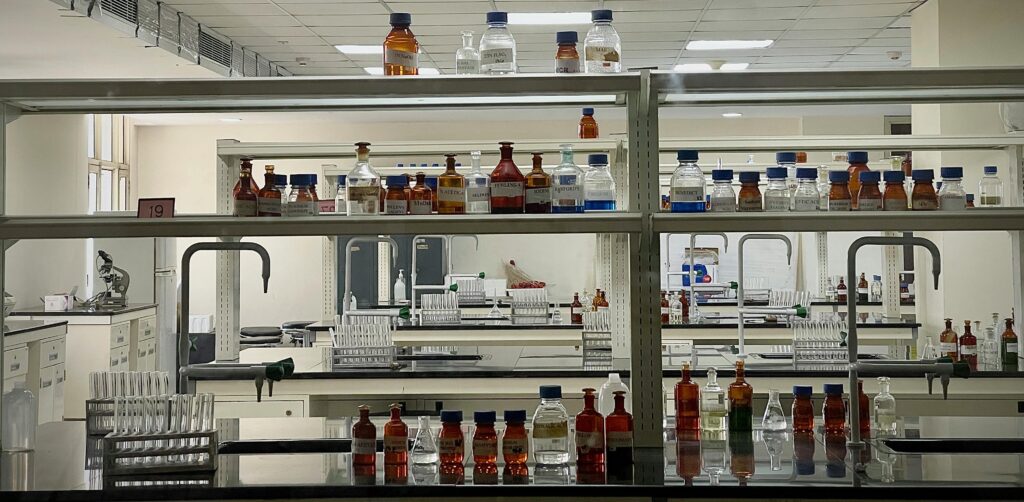
Our research addresses challenges in sustainable materials processing, energy storage, and conversion through the development of novel metal-organic and inorganic materials.
Ligand-mediated ion speciation:
Electrochemical deposition offers a single-step, reagent-free route for the selective recovery of metal ions from solution. However, two fundamental challenges limit its effectiveness in complex mixtures: closely spaced reduction potentials make electrochemical discrimination between target ions difficult, and reduction potentials that fall outside the stability window of water lead to parasitic hydrogen evolution rather than productive metal deposition. We address both challenges through electrolyte engineering. By precisely tuning the coordination environment of target metal ions via selective ligand complexation, we alter their reduction potentials to create the electrochemical contrast needed for selective recovery. Concurrently, through careful design of the electrolyte composition, we extend the effective electrochemical stability window of aqueous systems, enabling the recovery of metals that would otherwise be inaccessible in water-based electrolytes.
Electrocatalysis
The electrochemical synthesis of ammonia, through either the direct reduction of N₂ or the reduction of nitrate, represents a promising alternative to the energy-intensive Haber-Bosch process. Beyond ammonia production, nitrate reduction offers the added benefit of remediating nitrate-contaminated wastewater, simultaneously addressing a pressing environmental challenge. Despite its potential, this technology faces significant obstacles: sluggish reaction kinetics, low Faradaic efficiency, competition from the hydrogen evolution reaction (HER), and mass transfer limitations at the electrode interface. We pursue highly functional inorganic and metal-organic catalysts, coupled with targeted electrolyte engineering, to simultaneously address these challenges and improve the selectivity, efficiency, and practicality of electrochemical nitrogen transformations.
Na-ion batteries
Rechargeable sodium-ion batteries (SIBs) have emerged as a compelling energy storage technology, underpinned by the exceptional natural abundance and geographic diversity of sodium resources. Increasingly viewed as a cost-effective alternative to lithium-ion batteries, SIBs nonetheless face critical performance limitations: lower energy density, irreversible structural phase transitions in cathode materials at elevated voltages, and interfacial instability that degrades cycle life. We focus on the development of novel cathode materials that operate at wider voltage windows with higher charge-storage capacity and structural stability to target the key bottlenecks that currently limit the practical deployment of SIBs.
